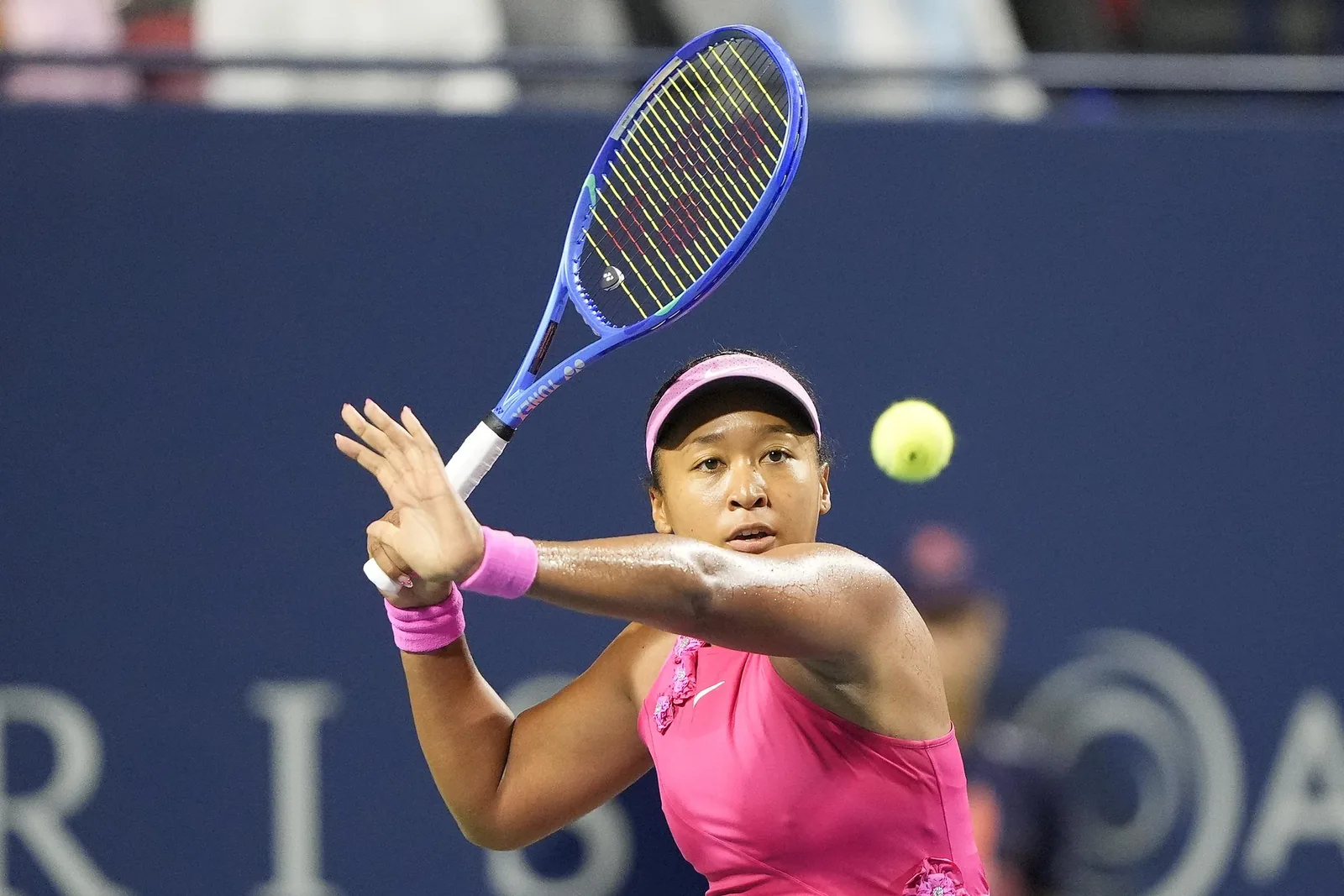
Naomi Osaka says she is not far from the level that produced four Grand Slam titles, but she also says she has thought about retirement and often wonders how long she will keep playing. The 29-year-old Japanese player spoke to reporters on Sunday before returning to the Pan Pacific Open in Tokyo next week as the seventh seed. The Naomi Osaka retirement question, raised by the player herself rather than by outsiders, now sits alongside her claim that her form is close to returning (Naomi Osaka retirement).
Osaka stepped away from tennis for 15 months after the birth of her daughter and came back in 2024. She is currently ranked 19th in the world. Her comments were reported by Reuters and carried by gmanetwork.com.
Naomi Osaka retirement remarks tied to her daughter
Osaka framed the uncertainty around her career as a family question rather than a tennis one. "It's tough, sometimes I look towards my future and wonder how long I'm going to play," she said.
She then made the condition explicit. "Because if my daughter did say she didn't want me to travel as much, I'm not the type of person to ignore that."
That is a narrow statement rather than an announcement. Osaka did not say she intends to stop, and nothing in her comments sets a date or a final tournament. The practical reading is that her schedule remains open to change depending on her daughter, not that a farewell is scheduled.
Pan Pacific Open opener against Jasmine Paolini
Osaka's immediate assignment is the Pan Pacific Open in Tokyo, where she is seeded seventh. She opens against Italy's Jasmine Paolini.
The field is led by world number one Elena Rybakina and also includes Alex Eala of the Philippines. For Osaka, the draw offers a first-round test against a established opponent before any talk of a deeper run becomes relevant.
Her own framing of the week is modest: she wants to keep learning and to go further in tournaments than she has recently. She did not set a results target for Tokyo.
Osaka's season results and world ranking
Osaka's claim that she is close to her best is backed by a set of results this season rather than by a single breakthrough. She reached the quarter-finals at Wimbledon after beating top seed Aryna Sabalenka, and made the last 16 at both the French Open and the US Open.
She also reached the semi-finals in Washington and the quarter-finals in Toronto. Those are consistent second-week and late-week appearances, which is the pattern she points to when describing her progress.
"I genuinely don't feel like I'm that far off," Osaka said of her chances of contending for titles again. "I think I built a pretty solid base and I'm excited to see if I can continue learning and going further in tournaments."
What to watch in Tokyo
The measurable question is whether Osaka can convert a solid base into a deeper run on home courts, where the attention on her will be greater than at most events on her schedule. Her ranking of 19th puts her outside the top tier she once occupied, and each week is a chance to close that gap.
The less measurable question is the one she raised herself. Osaka has described a future in which her daughter's preferences could override her own plans, and she has not ruled anything out. She has also not suggested she is close to acting on it.
She plays Paolini first in Tokyo, with Rybakina and Eala elsewhere in the field. Beyond that, Osaka offered no schedule commitments and no timeline for a decision about how long she continues.
The original report on Osaka's comments was published by gmanetwork.com.