Reporting note: this article draws on BBC Sport; PGLive provides the summary and editorial framing.
Burrage Wrexham Open progress was secured on day two at the Wrexham Tennis & Padel Centre, where Jodie Burrage and Alicia Dudeney both won their first-round matches in straight sets. They join Hannah Klugman, who had already booked her place in Thursday's action at the World Tennis Tour W100 event.
Burrage Wrexham Open opener ends in two sets
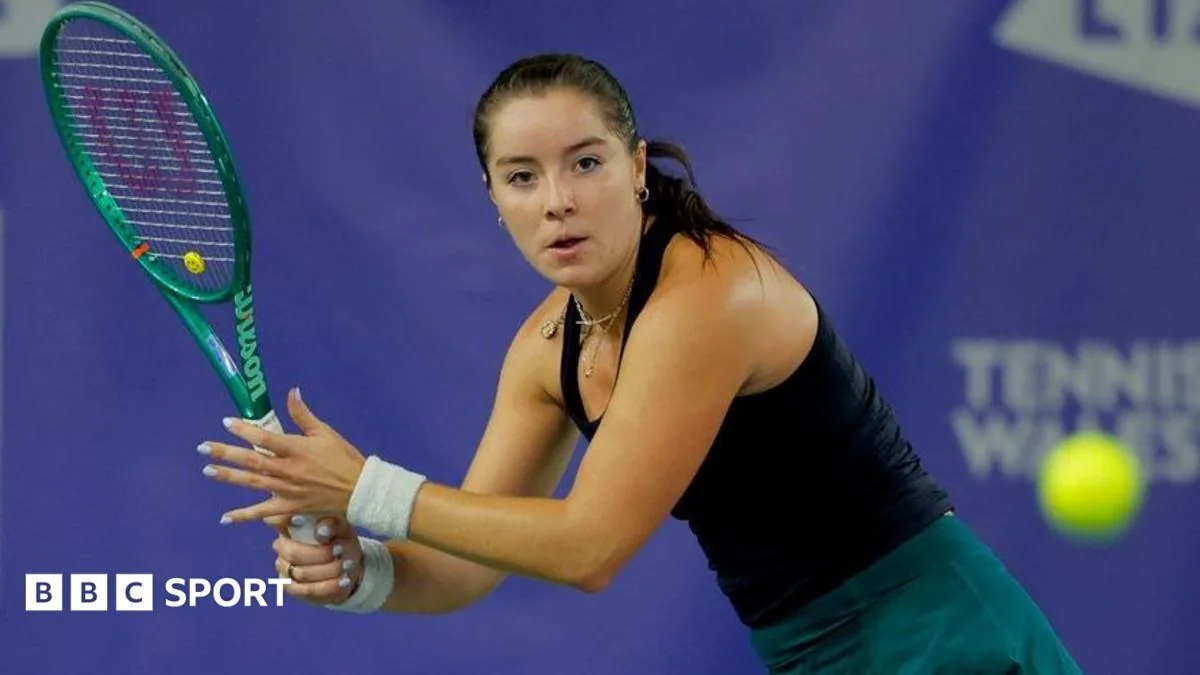
Burrage, a familiar face in Great Britain's Billie Jean King Cup team, opened the day's play against Eva Vedder of the Netherlands and finished it 6-2 7-5. Vedder is ranked 180th in the world, which makes the second set the more instructive part of the result.
The win sets up a second-round meeting with Germany's Noma Noha Akugue, the fourth seed. That is a different order of resistance from a first-round draw, and it arrives early enough in the week that Burrage has had little time on the surface.
Alicia Dudeney and Hannah Klugman keep British interest
Dudeney, Britain's number seven and the world number 232, beat Germany's Tessa Johanna Brockmann 6-4 6-4. She next faces seventh seed Susan Bandecchi of Switzerland, another seed placed in the opposite half of the draw from Burrage's opponent.
Klugman had already progressed before the second day's play, meaning three British players are through to the second round. For a W100 event staged indoors in October, that is a reasonable return, though the seeded opposition now standing in the way will test how much of it converts.
Anna Siskova ends Alina Charaeva's stay
The Czech Republic's Anna Siskova produced the day's notable result, coming from a set down to beat Alina Charaeva 4-6 6-3 6-2. Charaeva, of Armenia, beat world number one Elena Rybakina at the China Open earlier this month.
That kind of win tends to follow a player into smaller tournaments and raise expectations around her. Here it did not survive the first round, which says something about how quickly form travels between levels of the tour.
Mimi Xu does not defend her title
Reigning champion Mimi Xu, from Swansea, is not defending the title this year. She has opted instead to compete at the W75 Saguenay tournament in Canada, leaving the Wrexham draw without its 2025 winner.
The tournament's roll of champions is short and mixed: Marketa Vondrousova in 2022, Viktorija Golubic in 2023, Sonay Kartal in 2024 and Xu in 2025. Only Kartal and Xu were British winners, which frames the current home contingent's task.
Wrexham Open schedule and what comes next
The event runs to 25 October at the Wrexham Tennis & Padel Centre, with coverage on BBC Sport online and BBC iPlayer. Thursday 22 October brings the second round in singles alongside the doubles quarter-finals.
Friday 23 October holds the singles quarter-finals and doubles semi-finals, Saturday 24 October the singles semi-finals, and Sunday 25 October both finals. Burrage's match against Noha Akugue and Dudeney's against Bandecchi are the two British fixtures to track first.
The original report is available at bbc.co.uk.