Reporting note: this article draws on Sky Sports; PGLive provides the summary and editorial framing.
The Mechanics of a Breakthrough
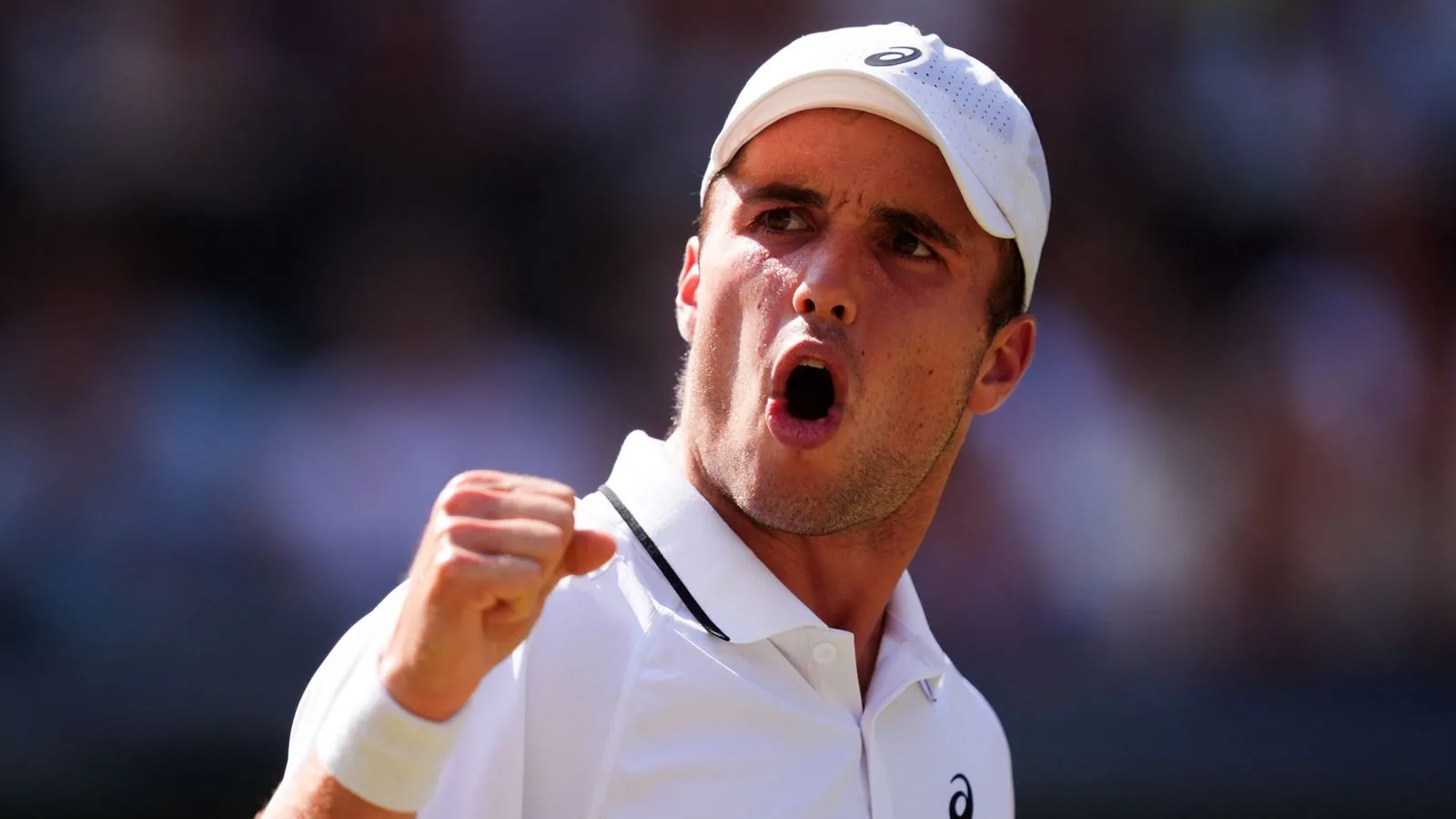
Arthur Fery’s trajectory shifts from the periphery to the center of the ATP circuit. Following a semi-final appearance at Wimbledon, the 24-year-old has vaulted from world No 114 to No 36. This rapid climb forces a recalibration of his professional infrastructure, specifically regarding media management and the psychological demands of high-stakes performance.

Fery’s run at the All England Club—marked by victories over Zizou Bergs, Grigor Dimitrov, and Flavio Cobolli—demonstrates a high-functioning kinetic chain under pressure. His eventual exit at the hands of Alexander Zverev provided a baseline for his current physical and technical limitations. Fery acknowledges that the transition to the tour’s upper echelon requires more than just racquet head speed; it demands the ability to sustain focus while navigating the public scrutiny previously associated with players like Emma Raducanu.
Strategic Implications for the US Open
The shift in ranking grants Fery direct entry into the US Open, a significant departure from his previous status where he did not even contest the qualifying rounds. This change in scheduling allows for a more consistent exposure to top-tier opponents, a necessary condition for further technical development. Fery notes that the "healthy nerves" experienced on Centre Court serve as a foundational experience for the upcoming hardcourt swing.
The physical toll of such a rapid ascent is significant. As Fery prepares for Flushing Meadows, the focus remains on maintaining the integrity of his game under the increased volume of tour-level media obligations. His ability to manage the transition from a wild card entrant to a established British No 1 will be tested when the US Open commences on August 30.
Statistical Context: Fery’s rise is underscored by his ranking jump of 78 places, placing him in a rare cohort of players who have achieved deep Grand Slam runs early in their professional development. His performance at Wimbledon stands as the 11th instance of a player ranked outside the top 100 reaching such a stage in the modern era.