Reporting note: this article draws on Sky Sports; PGLive provides the summary and editorial framing.
Powertrain Calibration and the Energy Management Bottleneck
The operational failure observed during the opening formation laps at Sepang highlighted a critical vulnerability in modern Formula 1 powertrain architecture. Under torrential rainfall and low-grip parameters, the contemporary hybrid power units—operating with an energy split approaching 50 percent electrical deployment—encountered an unpredicted regulatory trap. A confluence of minimal throttle opening, low internal combustion engine speeds, and sector-specific energy limits prevented the hybrid electronic control units from executing standard torque delivery models.
The root of this kinetic breakdown stems directly from the removal of the Motor Generator Unit - Heat (MGU-H). In the absence of an electrical spooling mechanism to maintain turbine velocity off-throttle, the turbocharger depressurizes during prolonged low-speed circulating phases. When mechanical acceleration is subsequently demanded, instantaneous energy draw from the battery pack is depleted before the internal combustion engine generates sufficient exhaust gas velocity to spin the compressor. Because strict software boundaries exist to prohibit electronic traction control, falling short of mandated torque thresholds locked multiple chassis into a restricted regulatory safe mode, limiting track speeds to roughly 20 kph.
Driver Impact and Software Rectification
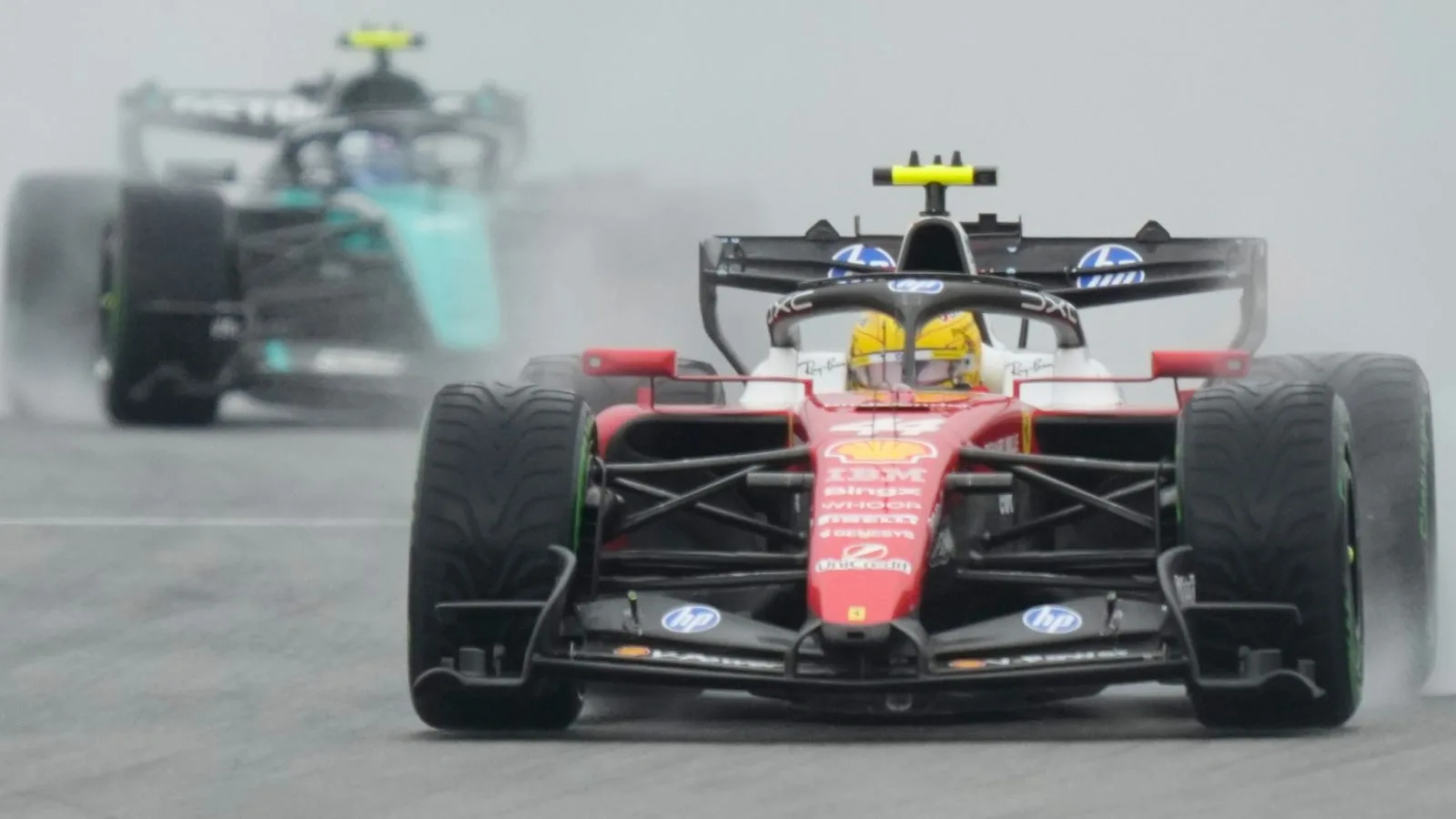
The ensuing systemic failure compromised grid leaders, with Red Bull's Max Verstappen and Ferrari's Lewis Hamilton nearly brought to a total standstill as their engines stalled in torque compliance. Ferrari's Charles Leclerc observed the cascading deceleration from fourth position, noting that instantaneous power swings of up to 100 horsepower presented severe operational hazards under minimal visibility. To rectify the grid-wide failure, the FIA Technical Department abandoned the initial start sequence and deployed an emergency software patch during an hour-long rain delay, effectively removing sector energy limits to permit manual power unit resets before Verstappen eventually claimed the race victory.
Formula 1 transitions immediately to the Marina Bay Street Circuit for the Singapore Grand Prix sprint weekend, where powertrain calibration maps and low-speed energy harvesting protocols will face renewed operational scrutiny.
Surface Morphology: Sepang International Circuit
The structural characteristics of the Sepang circuit surface provide critical context for low-speed tyre scrubbing and thermal loading. Constructed with a modified bitumen binder and crushed basalt aggregate featuring a nominal maximum aggregate size of 10mm to 14mm, the wearing course is engineered for high lateral macro-texture to facilitate moisture evacuation across wide transverse gradients. Under heavy precipitation, the water film thickness exceeds the mean texture depth of the asphalt matrix, drastically reducing the micro-roughness coefficient and compounding the inability of chassis to transmit transitional torque without triggering electronic energy safety cuts.