Reporting note: this article draws on Sky Sports; PGLive provides the summary and editorial framing.
Djokovic Extends Beijing Winning Streak to 32-0
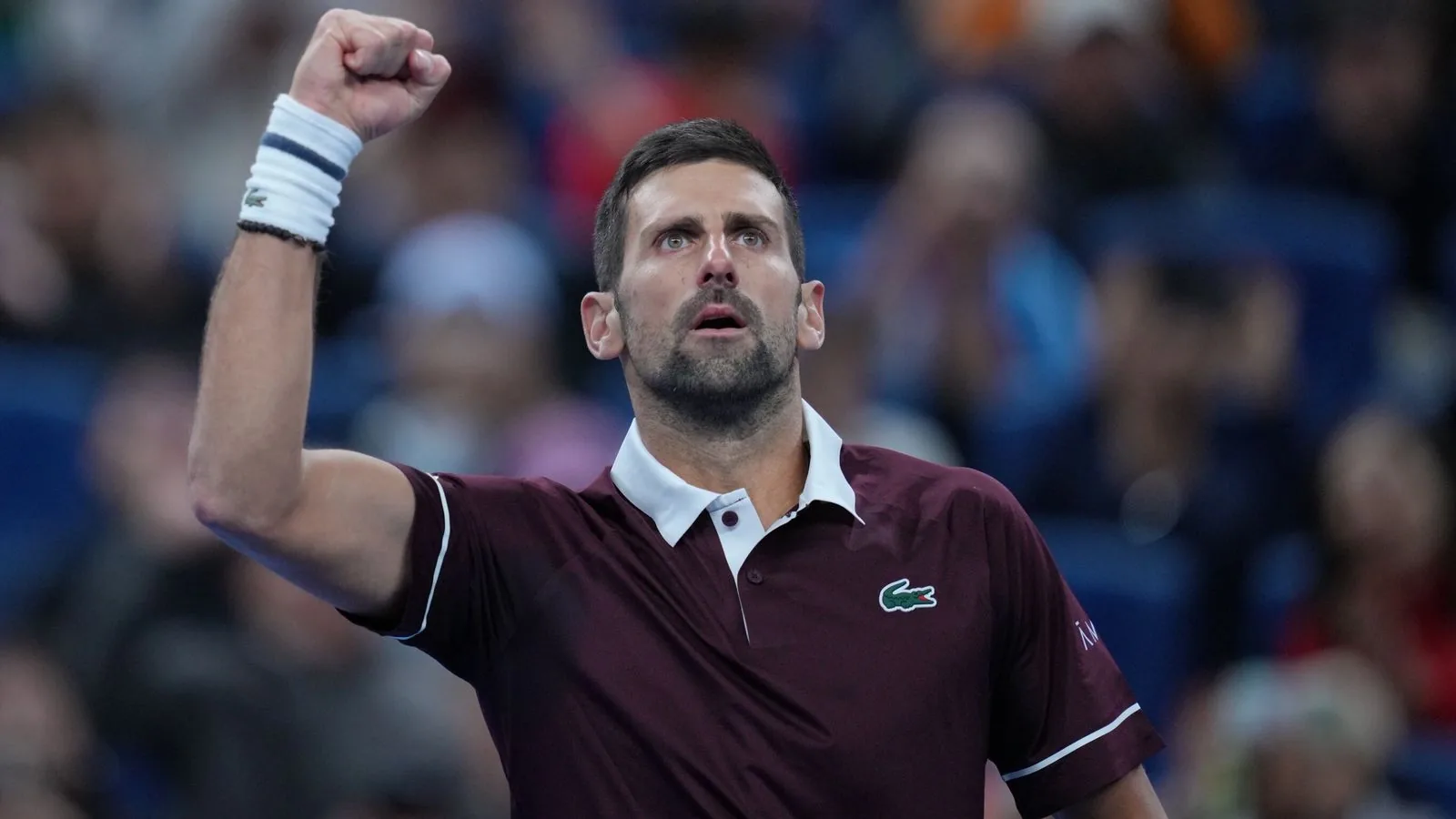
Novak Djokovic rallied from a set down to defeat Alexander Zverev 4-6, 6-4, 6-4 in the quarter-finals of the China Open on Sunday. The victory preserved the 39-year-old Serbian's unblemished record in Beijing, taking his career tournament tally to 32-0 and breaking Rafael Nadal's Open Era record for the best start by a male player at a single tour-level event.
Nadal previously held the men's mark after winning his first 31 matches at the French Open. With this win, Djokovic sits behind only Monica Seles (34-0 at the Australian Open) on the all-time list, while also becoming only the third player in ATP history since 1973 to record a top-three victory after turning 39, joining Ken Rosewall and Jimmy Connors.
Match Summary and Key Tactical Shifts
The encounter began with immediate friction for the six-time Beijing champion. Cold conditions and early rhythm issues led to two double faults in the opening stages, allowing Zverev to claim an early break and close out the first set 6-4.
Djokovic gradually adjusted his baseline depth and tactics, integrating serve-and-volley sequences and drop shots to disrupt the German's baseline power. The decisive shift arrived at 5-4 in the second set, where Djokovic converted a crucial break point to level the contest. In the deciding set, both men held firm under heavy hitting until Djokovic struck again at 5-4 on Zverev's serve, breaking to seal the match after two hours and thirty-one minutes.
"I had a terrible start. Two double faults at the beginning. It was quite cold and honestly, I didn't feel warmed up, but my fault," Djokovic said. "I kind of felt already from midway through the first set that I was starting to get a good rhythm... These are the kind of moments that define dreams, I think, of every tennis player. I'm still there, still grinding, still making the youngsters work for their money."
Semi-Final Lineup and What Comes Next
The result denies Zverev valuable points in his pursuit of the world No. 1 ranking, while moving Djokovic within two wins of a seventh China Open title and his first trophy of the season. Djokovic will face Daniil Medvedev in the semi-finals, following the Russian's 7-6 (7-4), 6-3 victory over Francisco Cerundolo.
Elsewhere in Asian swing action, top seed Carlos Alcaraz booked a place in the Japan Open semi-finals after Denis Shapovalov retired trailing 7-6 (7-3), 2-1 in Tokyo.
As Djokovic walked off the court to the roaring applause of the Beijing crowd, the dark chevron of sweat stretching across the spine of his shirt mapped every sharp change of direction and extended exchange required to keep his historic streak alive.