

Technical Overview of the Hungarian Grand Prix
The Hungarian Grand Prix served as the final act of the 2026 Formula 1 season's first half, characterized by a tightly packed field where the top four teams remained in constant visual proximity. The race highlighted the delicate balance between aerodynamic efficiency and mechanical reliability, as teams navigated the high-degradation surface of the Hungaroring.
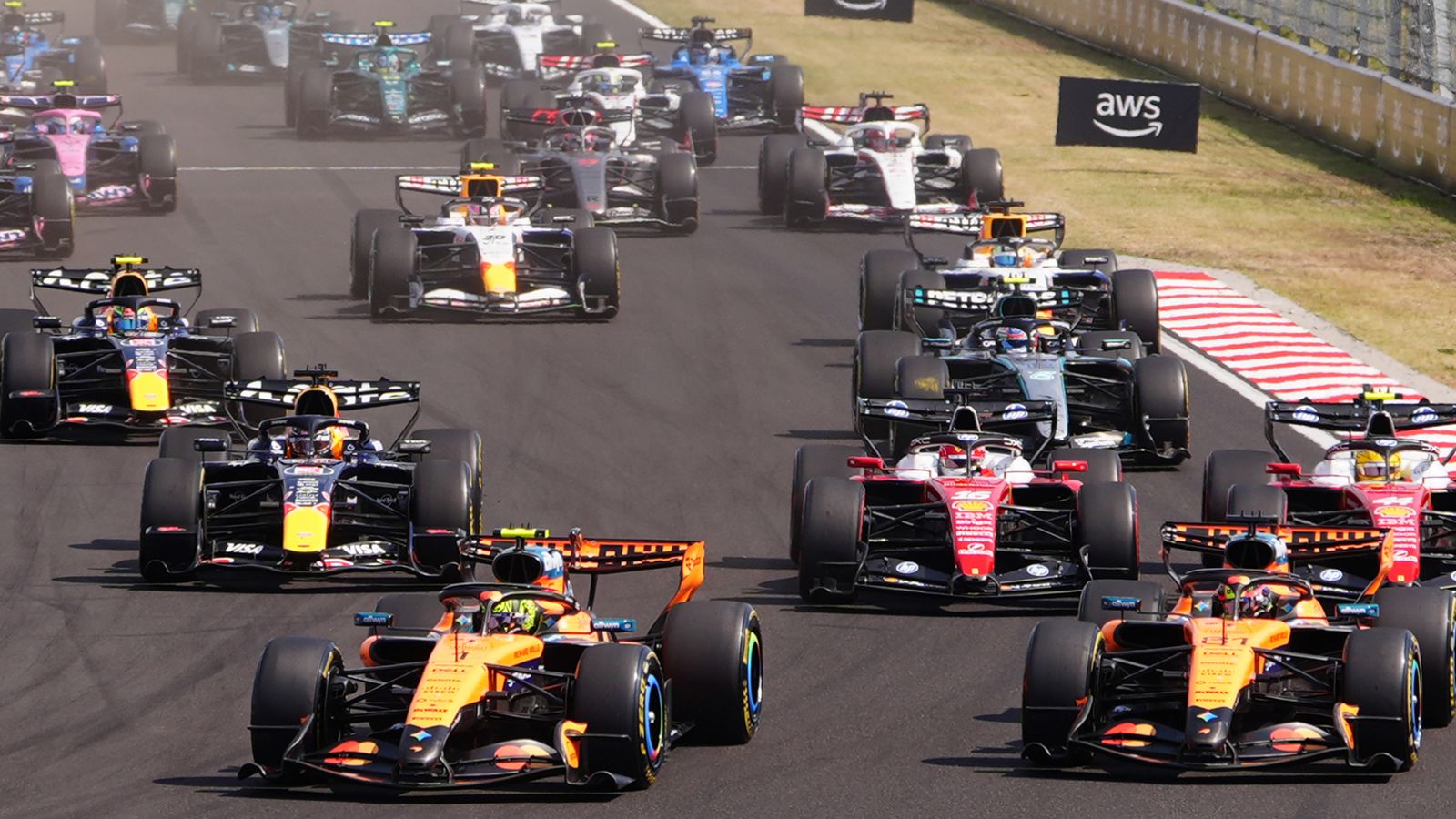
Lando Norris secured both pole position and the race victory, though his path to the top step was far from linear. The McLaren driver faced significant pressure throughout the afternoon, particularly from his teammate, who held the lead early after a decisive move at Turn 2. The race dynamic shifted during the second round of pit stops, where Norris utilized a strategic tyre-life offset to reclaim the lead, eventually pulling away despite a late-race Virtual Safety Car intervention.
The race was defined by the performance of Lando Norris, Oscar Piastri, and Max Verstappen. Piastri’s afternoon was marred by a collision with Carlos Sainz while attempting to lap the Williams, an incident that compromised his race before a transmission failure eventually forced his retirement. Meanwhile, Max Verstappen managed to secure second place despite persistent complaints regarding aerodynamic degradation and inconsistent gear shifts, successfully holding off the Ferrari duo of Lewis Hamilton and Charles Leclerc.
Championship Context and Future Scheduling
Kimi Antonelli’s third-place finish proved vital for his championship standing, extending his lead over Lewis Hamilton to 50 points and over George Russell to 59 points heading into the summer break. Mercedes faced a challenging weekend, with both drivers struggling for pace and dealing with car-specific issues, including engine damage sustained by Russell during the race.
Looking ahead, the championship remains highly competitive with 291 points still available. Formula 1 has confirmed that the Bahrain Grand Prix will be relocated to the Sepang International Circuit in Malaysia, demonstrating the sport's continued flexibility in response to regional instability. The season is set to resume with a Sprint weekend at the Dutch Grand Prix from August 21-23.
Track Surface and Aggregate Composition
The Hungaroring circuit is characterized by a medium-to-high downforce configuration, with a track surface composed of a dense, high-friction aggregate. The asphalt exhibits a significant degree of thermal sensitivity, which, when combined with the circuit’s technical, twisty layout, places extreme lateral loads on the tyre sidewalls. The aggregate, primarily composed of crushed limestone and bitumen binders, tends to polish under sustained racing conditions, leading to the rapid surface degradation observed during the second stint of the Grand Prix.


